
Core Gameplay Loop
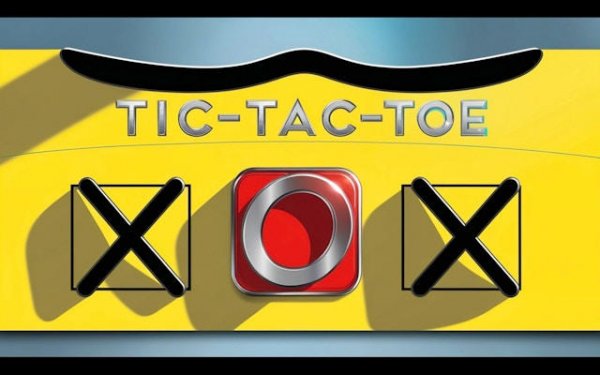
The fundamental challenge revolves around claiming positions on a nine-cell board. One player uses a cross marker, the other a circle. They take turns placing their symbol in any empty cell. The first to align three of their markers horizontally, vertically, or diagonally wins. If all cells fill without a winner, the match ends as a draw. This simple structure creates a surprisingly deep tactical puzzle.
Match Formats and Opponents
Two distinct play modes are available. In local multiplayer, two people share the same screen, taking turns on the same device. For solo practice, an AI opponent provides a consistent challenge. The AI follows a basic decision-making algorithm that prioritizes blocking winning moves and claiming advantageous positions. This makes it suitable for beginners learning the game's patterns.
Visual and Interface Design
The interface is deliberately minimal, focusing attention on the board. Markers are clearly drawn and contrast well against the background. The responsive layout automatically adjusts to fit phones, tablets, and computer screens. Touch controls are precise, with each cell responding immediately to taps. A restart button appears after every match, allowing quick replay without navigating menus.
Progress Tracking and Feedback
After each match, the game updates a scoreboard showing wins, losses, and draws for both players. This record resets when the page is refreshed, keeping the experience light and session-based. The clear win and draw announcements help players quickly understand outcomes. There are no ads or pop-ups interrupting gameplay, maintaining a focused experience.
Strategic Depth for New Players
While the rules are straightforward, mastering the game requires recognizing common patterns. The center cell is the most valuable because it participates in four possible winning lines. Corner cells offer two winning paths each. Edge cells only contribute to one. Understanding these positional values helps players make better decisions. The AI opponent provides a safe environment to experiment with different opening moves and defensive strategies.








Comments
0 comments